





General Meet Information
Why swim in a meet?
- Meets are the best way for your swimmer to see improvements in both their technique and speed, as well as provide feedback to coaches on what needs more work at practice.
- It’s fun! Meets are the best way to spend time with your teammates!!
- Learning sportsmanship, building confidence, goal setting opportunities. Participating in meets helps the coaches work on all these things with your swimmer.
- Did we mention it’s FUN?!!
How do swimmers prepare for a meet?
Get a good night’s sleep, eat a nutritious breakfast, and bring healthy snacks with you.
What should I bring to a meet?
- Team suit
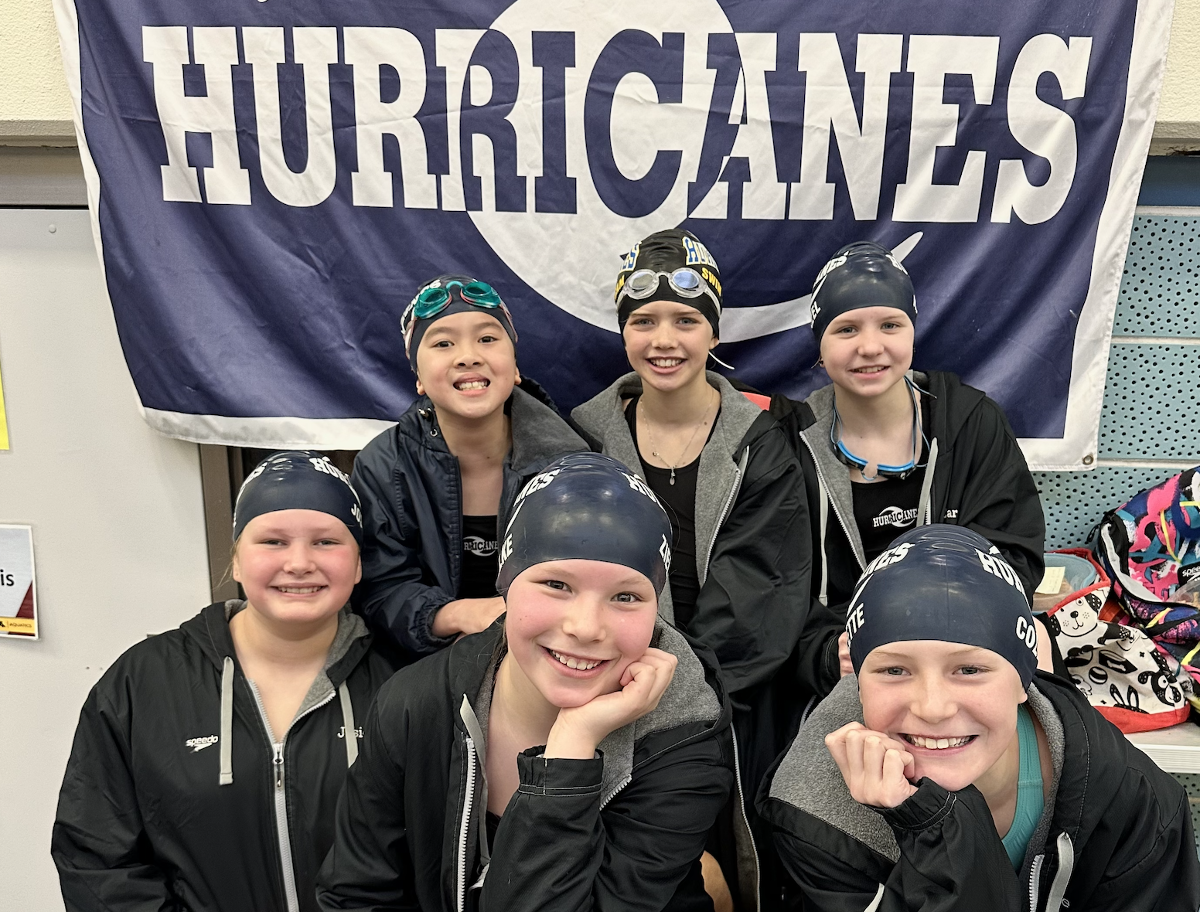
- Team swim cap
- Goggles (a backup pair is a good idea)
- Towel(s)
- Water bottle and healthy snacks
- Quiet activities (playing cards are always a good option)
Where do swimmers sit during the meet?
The team will sit together in the designated area for that facility. Swimmers should look for teammates and Hurricanes coaches wearing team shirts when they arrive.
How do I know which events my swimmer is swimming?
Once registration for the meet is complete, your swimmer’s events are available for viewing in your SportsEngine Motion account at any time. Most meet hosts provide a PDF of the meet program on their website (the Hurricanes usually post these in the meet information when they are received). Meets are pre-seeded, so the program lists the swimmers by event (the stroke/distance), heat (the grouping of swimmers), and lane (the specific lane in which your swimmer is expected to race for that event).
How does my swimmer know which events they are swimming?
Coaches will often discuss events with swimmers at practice before the meet. We also encourage swimmers to look up their events in the meet programs when they are posted at the pool before the meet. Parents of younger swimmers can also help by using a Sharpie marker to write their swimmer’s event/heat/lane info on their arm before the meet.
Are parents allowed on deck at meets?
Parents are not allowed on deck at meets, so make sure your swimmer knows where you are sitting. Usually, there are separate seating areas for spectators (bleachers). Some venues allow spectators to ‘camp’ in an area outside the pool. Swimmers can check in with parents during the meet but should ask their coach first to make sure they have time before their next event.
Do I need a team suit to swim in a meet?
While wearing a team suit helps identify your swimmer and builds a sense of community, it is not required. If they don’t have a team suit, we recommend a solid black suit. Team caps ARE REQUIRED at meets, and latex team caps are provided to all swimmers free-of-charge. Coaches always have a supply at meets if your swimmer needs one. Please also note: Tie-back suits are fine for practice but are not allowed by USA Swimming at meets.
When should I arrive?
Your lead coach will let you know when to arrive, but it is typically 10-15 minutes before your group is scheduled to warm up.
Will I be at the meet all day?
This depends on the meet structure. Some meets have all ages together in the same session. Others are divided into morning and afternoon sessions. Most often, 12 & under swimmers compete in the mornings, and 13+ swimmers compete in the afternoon.
What about races?
While swimmers are ultimately responsible for being ready to race, the coaches will often direct younger swimmers to the blocks prior to their races. It’s important they be on deck in the team area 20-30 minutes before their race. If they miss their heat, they may not be allowed to swim in that event.
During the swim, cheer for your swimmer (and their friends) and encourage your swimmer to cheer for teammates! Remember that improvement and personal accomplishments are more important than winning, and improvement is not just about their final time. Starts, turns, stroke technique, and pacing strategies are some of the things that swimmers are working on and often improve long before the desired ‘best time’. If your swimmer is disappointed in their swim, continue to focus on the positive things that happened in a race. It’s okay if a swimmer negatively evaluates a performance; just don’t dwell on it. Think about improvement and focus on fun. As a parent, always praise your swimmer and his/her effort.
When should I leave a meet?
When a swimmer has completed all their events, the swimmer and their parents are free to go home.
What is a DQ?
If swimmers violate a rule during a race, they will be disqualified (DQ'd) by a stroke and turn official. Everyone gets DQ’d at times — even experienced swimmers. For younger swimmers, you should view the DQ as constructive feedback to help them learn to swim legally. It simply identifies for the swimmer and their coach an area that needs to be worked on and improved.
How can I follow my swimmer’s progress at meets?
Most meets offer the option to livestream the sessions so your family and friends can watch from home when they can’t be at the meet in person.
Another way to follow your swimmer during a meet is through the MeetMobile app (available in the Apple Store and GooglePlay). The free version provides limited information. An annual subscription gives unlimited access. This will provide real-time info on heats and events during a meet as well as the results. Host teams may vary in terms of what/when info is available, but this is a great resource during a meet.
What are “Time Standards”?
Age group time standards are designed to encourage age group swimmers "to step their swimming up to the next level," says USA swimming. Time standards also provide a way for swimmers to get a general idea of how they match up with other swimmers their age. In Minnesota age-group swimming, the time standards are broken down into Bronze, Silver, Gold, Champ and Zone times, with Bronze times being the first level of the progression. Some meets require time standard achievement to qualify (or impose a time standard ability limit). Meets in Minnesota will typically use the Minnesota Swimming standards to define qualification. These standards can be found on our website under the “Time Standards” tab. Senior swimmers (13 & Over) may also strive for various national level qualifying times.
